
A Banarasi saree is more than just an elegant piece of Indian clothing. It represents centuries of textile craftsmanship, traditional weaving, artistic design, and India’s rich cultural heritage. Known for luxurious fabrics, intricate motifs, detailed borders, and distinctive zari work, Banarasi sarees have earned a special place in the wardrobes of women across generations.
From traditional weddings and festive celebrations to receptions and formal occasions, a Banarasi saree can create a graceful and sophisticated look. While classic Banarasi silk sarees continue to be popular, modern designers have also introduced lighter fabrics, contemporary colours, minimal patterns, and updated blouse styles.
Whether you are buying your first Banarasi saree, searching for a wedding outfit, or simply exploring different saree styles, understanding the fabric, designs, colours, weaving traditions, and styling possibilities can help you make a better choice.
In this guide, we explore everything you need to know about Banarasi sarees, including their history, popular types, designs, colours, styling ideas, buying tips, and care instructions.
What Is a Banarasi Saree?
A Banarasi saree is traditionally associated with Varanasi, also known as Banaras, in Uttar Pradesh, India.
These sarees are recognised for their intricate weaving and luxurious appearance. Traditional designs often feature floral motifs, paisleys, foliage, geometric patterns, decorative borders, and metallic zari work.
One of the most distinctive characteristics of many Banarasi sarees is that the patterns are woven into the fabric rather than simply printed onto its surface. This gives the saree a rich texture and detailed finish.
Banarasi sarees are available in several fabrics and styles. Silk remains one of the most popular choices, particularly for weddings and formal events, while organza, georgette, tissue, and other lighter fabrics offer contemporary alternatives.
The combination of traditional craftsmanship and evolving fashion has helped Banarasi sarees remain relevant in modern Indian fashion.

pic credit- pexels.com
History of the Banarasi Saree
The history of Banarasi weaving is deeply connected with the cultural and textile traditions of Varanasi.
The city has been an important centre of silk weaving and textile craftsmanship for generations. Over time, local artisans developed sophisticated weaving techniques and distinctive patterns that became associated with Banaras.
Banarasi textiles have also been influenced by different artistic traditions. Floral patterns, intricate foliage, paisley-inspired motifs, and ornate designs became important features of the weaving tradition.
The use of zari added another dimension to the saree. Metallic threads, traditionally made using precious metals in some historical contexts, were woven into silk to create elaborate borders and motifs.
Today, Banarasi sarees continue to combine traditional craftsmanship with modern fashion. Designers increasingly experiment with colour combinations, lightweight fabrics, contemporary motifs, and innovative blouse designs while retaining the essence of Banarasi aesthetics.
CLICK HERE TO SEE TRENDING SAREES>>>>
Why Are Banarasi Sarees So Popular?
There are several reasons Banarasi sarees remain among the most sought-after Indian sarees.
1. Rich Cultural Heritage
A Banarasi saree represents a longstanding Indian weaving tradition. For many women, wearing one is a way of celebrating Indian craftsmanship and cultural heritage.
2. Luxurious Appearance
The combination of silk, intricate motifs, decorative borders, and zari can create a rich and sophisticated appearance.
3. Perfect for Weddings
Banarasi silk sarees are especially popular for wedding ceremonies, receptions, engagements, and family celebrations.
4. Variety of Designs
Banarasi sarees are available in traditional and contemporary designs, making them suitable for different age groups and personal styles.
5. Timeless Appeal
Unlike many short-lived fashion trends, classic Banarasi designs remain relevant across generations.
6. Versatile Styling
A Banarasi saree can be styled traditionally with gold jewellery or given a modern appearance with a contemporary blouse and minimalist accessories.
Different Types of Banarasi Sarees
One of the most interesting aspects of Banarasi sarees is the variety available.
The fabric, weaving technique, pattern, and finishing can all influence the final appearance.
1. Banarasi Silk Saree
Banarasi silk sarees are among the most recognisable varieties.
They are known for their rich texture, elegant drape, and detailed designs. They are particularly suitable for weddings and formal celebrations.
Traditional colours such as red, green, maroon, purple, royal blue, and gold remain popular, while modern collections also feature pastel and neutral shades.
2. Katan Silk Banarasi Saree
Katan silk is known for its smooth and refined texture.
Katan-style Banarasi sarees can provide a sophisticated appearance while maintaining the traditional character of Banarasi weaving.
They are a good option for women who prefer understated luxury.
3. Organza Banarasi Saree
Organza Banarasi sarees offer a lighter and more delicate alternative to heavier silk.
They often feature floral motifs, intricate borders, and a slightly translucent appearance.
Pastel organza sarees are particularly popular for daytime weddings, festive gatherings, and elegant occasions.
4. Georgette Banarasi Saree
Georgette provides a soft and flowing drape.
A georgette Banarasi saree can combine traditional motifs with a more lightweight and contemporary feel.
It is suitable for receptions, parties, celebrations, and occasions where comfort is important.
5. Tissue Banarasi Saree
Tissue sarees are known for their luminous appearance.
A Banarasi tissue saree can look especially striking in metallic gold, silver, champagne, or pastel shades.
These sarees are often suitable for evening events and formal celebrations.
Popular Banarasi Saree Designs
Banarasi sarees are famous for their intricate motifs.
Here are some popular design elements to look for.
Floral Motifs
Floral patterns are among the most recognisable features of Banarasi textiles.
Flowers may be woven throughout the saree or concentrated around the border and pallu.
Floral designs can range from delicate and minimal to elaborate and richly detailed.
Paisley Motifs
Paisley-inspired motifs add a traditional character to the saree.
They can be used individually or arranged into larger decorative patterns.
Paisley designs work particularly well on traditional silk sarees.
Butidar Designs
Butidar sarees feature small motifs distributed across the body of the saree.
This creates an intricate appearance without making the overall design feel excessively heavy.
Butidar patterns can be suitable for both traditional and contemporary styling.
Jangla Designs
Jangla-inspired Banarasi sarees often feature elaborate floral and foliage patterns spread across the body.
They can create a rich and luxurious appearance and are particularly suitable for formal occasions.
Zari Borders
The border is one of the most important visual features of many Banarasi sarees.
Gold zari borders create a traditional appearance, while silver or contemporary metallic accents can provide a more modern feel.
Banarasi Saree Colours
Colour can dramatically change the personality of a Banarasi saree.
Red Banarasi Saree
Red is one of the most traditional choices for Indian weddings.
A red Banarasi silk saree with gold zari can create a classic bridal or festive appearance.
Green Banarasi Saree
Green offers a rich and elegant alternative to red.
Emerald, bottle green, parrot green, and traditional deep green shades can all work beautifully with gold detailing.
Pink Banarasi Saree
Pink Banarasi sarees range from vibrant magenta to soft blush.
Lighter pinks can work particularly well for daytime celebrations, while deeper pinks can create a dramatic evening look.
Blue Banarasi Saree
Royal blue, navy, turquoise, and powder blue offer different interpretations of the traditional saree.
Blue paired with gold or silver can create a sophisticated appearance.
Purple Banarasi Saree
Purple creates a rich and luxurious look.
Deep purple paired with gold zari is particularly suitable for receptions and evening celebrations.
Gold Banarasi Saree
Gold sarees can create an unmistakably festive appearance.
They are ideal for women who want a statement outfit for weddings, festivals, and formal celebrations.
Ivory and Pastel Banarasi Sarees
Contemporary fashion has made ivory, beige, peach, lavender, and other pastel colours increasingly popular.
These shades offer a softer interpretation of traditional Banarasi aesthetics.
How to Choose the Right Banarasi Saree
With so many choices available, selecting the right saree can feel overwhelming.
Here are some factors to consider.
Consider the Occasion
A heavy silk Banarasi saree may be ideal for a wedding ceremony.
For daytime events, organza or lighter silk can be more comfortable.
For receptions, you can explore designer Banarasi sarees featuring modern colours, statement borders, or contemporary styling.
Choose the Right Fabric
Think about how long you will be wearing the saree and the type of event you are attending.
Silk provides a rich and traditional appearance, while lightweight fabrics can be easier to manage.
Think About the Colour
Choose colours that complement your complexion, personal style, jewellery, and occasion.
Traditional celebrations often suit rich jewel tones, while daytime functions can work beautifully with lighter colours.
Consider the Border
A wide decorative border can create a more traditional appearance.
A narrow border can make the saree feel lighter and more contemporary.
Look at the Pallu
The pallu is often one of the most decorative parts of a Banarasi saree.
If you plan to drape the pallu prominently, pay attention to its design and detailing.
Banarasi Saree for Weddings
Banarasi sarees are particularly popular for Indian weddings.
Their rich appearance makes them suitable for both close family members and wedding guests.
For the Bride
A traditional red or deep-coloured Banarasi silk saree can create a timeless bridal look.
Gold jewellery, traditional bangles, a statement necklace, and a classic blouse can complete the outfit.
For the Bride’s Mother
Elegant silk Banarasi sarees in maroon, green, purple, blue, or gold can provide a sophisticated appearance.
A traditional blouse with subtle embroidery can complement the saree beautifully.
For Wedding Guests
Wedding guests can experiment with lighter fabrics, pastel colours, contemporary blouses, or designer Banarasi-inspired sarees.
This creates an elegant appearance without making the outfit unnecessarily heavy.
Banarasi Saree for Festivals
Banarasi sarees are also excellent for festivals.
For Diwali, choose rich jewel tones or metallic shades.
For traditional ceremonies, red, green, yellow, and gold can work beautifully.
For daytime celebrations, lighter colours and fabrics may be more comfortable.
Pair the saree with traditional earrings, bangles, and a simple hairstyle.
How to Style a Banarasi Saree
A beautiful saree becomes even more striking when styled thoughtfully.
Choose the Right Blouse
The blouse can either match the saree or create contrast.
Traditional silk blouses with zari borders are timeless.
Modern women can experiment with high-neck, boat-neck, elbow-length, sleeveless, puff-sleeve, or statement-back designs.
A designer blouse can transform a traditional Banarasi saree into a contemporary outfit.
Jewellery
Gold jewellery remains one of the most natural choices.
Depending on the occasion, consider:
- Jhumkas
- Chandbalis
- Temple jewellery
- Gold bangles
- Statement necklaces
- Kundan jewellery
- Pearl accessories
Avoid wearing too many statement pieces at once.
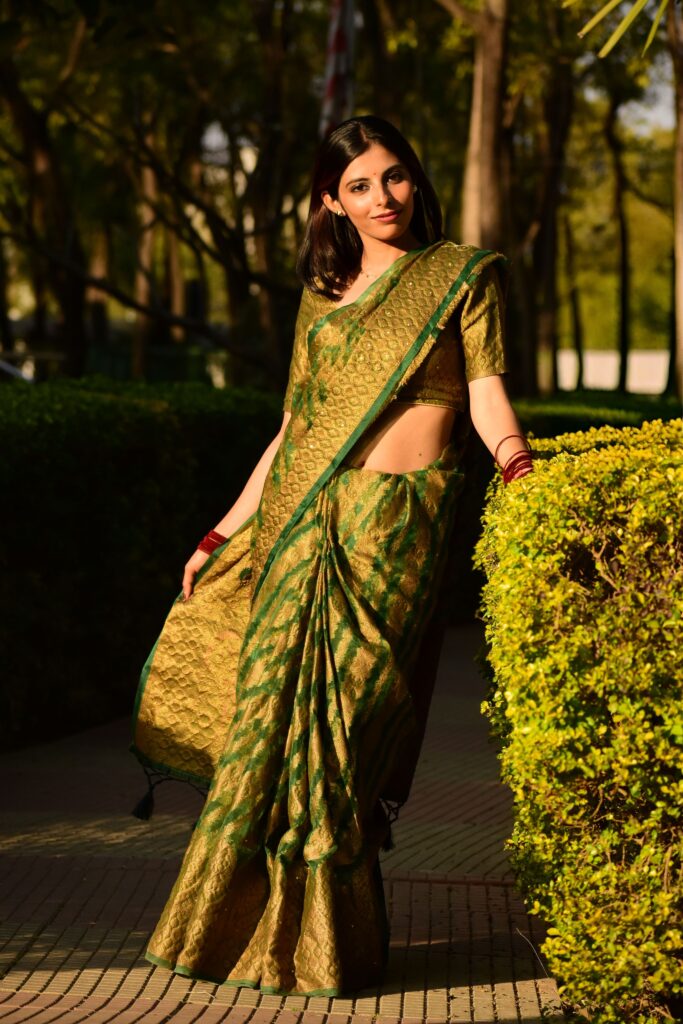
image credit – pixels.com
SEE ONLINE NEW TRENDING SAREE>>>>
Hairstyle
A traditional bun decorated with flowers creates a classic look.
For a contemporary outfit, try soft waves, a sleek bun, or a polished ponytail.
Footwear
Heels can provide a more formal appearance, while traditional juttis or embellished flats can be more comfortable for long celebrations.
Handbag
A clutch or potli bag can complement a Banarasi saree beautifully.
For modern styling, a structured metallic clutch can create a sophisticated contrast.
Modern Ways to Wear a Banarasi Saree
Banarasi sarees do not have to be styled traditionally.
Pair It with a Contemporary Blouse
A structured blouse with modern sleeves or neckline can immediately update the saree.
Add a Belt
A slim belt worn around the waist can create a contemporary silhouette.
This works particularly well with simpler Banarasi sarees.
Choose Minimal Jewellery
Instead of traditional layered jewellery, try statement earrings and a simple bracelet.
Experiment with Draping
A traditional Nivi drape is always elegant, but contemporary draping techniques can create a different appearance.
Designer Banarasi Sarees
Modern designer sarees have expanded the possibilities of traditional Banarasi fashion.
Designer interpretations may include:
- Contemporary colour combinations
- Minimalist borders
- Modern blouse designs
- Lightweight fabrics
- Unusual motifs
- Metallic accents
- Fusion styling
- Contemporary drapes
These styles are particularly suitable for women who appreciate traditional Indian textiles but want a more modern wardrobe.
For shoppers looking for contemporary Indian fashion, designer sarees can offer an excellent balance between heritage and modern style.
Banarasi Saree Blouse Designs
The blouse can significantly influence the final look.
Some popular options include:
Elbow-Length Blouse
A classic choice for traditional silk sarees.
High-Neck Blouse
Ideal for formal and sophisticated styling.
Boat-Neck Blouse
Simple, elegant, and versatile.
Puff-Sleeve Blouse
Adds a traditional and feminine touch.
Sleeveless Blouse
Creates a more contemporary appearance.
Embroidered Blouse
Works particularly well for weddings and receptions.
Statement-Back Blouse
Ideal for modern celebrations and evening events.
Jacket-Style Blouse
Adds a designer-inspired element to the saree.
How to Identify a Quality Banarasi Saree
If you are shopping for a Banarasi saree, pay attention to product details rather than relying only on photographs.
Check the Fabric
Read the product description carefully to understand whether the saree is made from silk, organza, georgette, tissue, or another fabric.
Examine the Weaving
Look closely at the motifs and borders in product photographs.
The details should appear clear and consistent.
Review the Saree Specifications
Before purchasing online, check:
- Fabric
- Saree length
- Blouse-piece availability
- Colour
- Border details
- Embellishment
- Care instructions
- Return policy
Consider the Occasion
Do not choose a saree simply because it looks beautiful in a photograph.
Think about where you plan to wear it and how comfortable it will be.
Banarasi Saree Price: What Influences the Cost?
The price of a Banarasi saree can vary considerably.
Several factors can influence the cost.
Fabric
Silk and premium fabrics can increase the overall price.
Weaving Complexity
Intricate patterns generally require greater craftsmanship.
Zari Work
Metallic detailing and elaborate zari designs can influence the cost.
Craftsmanship
Handcrafted sarees may require significant time and skill.
Design
Complex borders, elaborate pallus, and all-over motifs can affect pricing.
Brand and Designer
Designer collections may carry a premium because of design development, craftsmanship, finishing, and brand positioning.
Rather than choosing a saree based solely on price, consider the fabric, craftsmanship, design, and intended use.
How to Care for a Banarasi Saree
Proper care can help preserve the beauty of a Banarasi saree.
Follow the Care Instructions
Always follow the manufacturer’s recommended cleaning method.
Delicate silk and embellished sarees may require professional cleaning.
Store Carefully
Keep the saree in a clean, dry place away from direct sunlight and moisture.
Refold Periodically
If the saree remains folded in the same position for a long period, changing the folds occasionally can help reduce stress along the same crease lines.
Avoid Excessive Moisture
Moisture can damage delicate textiles and encourage unwanted odours or fabric problems.
Use Suitable Storage
For valuable sarees, breathable fabric storage can be preferable to tightly sealed plastic for long-term storage.

image credit- pexels.com
“Looking for a contemporary take on traditional Indian fashion? Explore Hevario’s designer saree collection for elegant styles designed for weddings, celebrations, festive occasions, and special events.” CLICK HERE TO TRENDING SAREE>>
Banarasi Saree vs Other Silk Sarees
India has a vast variety of silk sarees, each with its own regional identity.
Banarasi sarees are particularly known for their intricate woven motifs and luxurious appearance.
Kanjeevaram sarees are associated with South Indian silk traditions and are famous for their rich silk, contrasting borders, and traditional motifs.
Mysore silk sarees are known for their smooth texture and elegant simplicity.
Tussar silk sarees offer a distinctive natural texture.
Patola sarees are recognised for their complex patterned weaving.
Each style has its own appeal. Your choice should depend on your personal taste, the occasion, and the type of aesthetic you want.
Why Banarasi Sarees Remain Timeless
Fashion changes constantly, but certain garments remain relevant because they represent more than a trend.
Banarasi sarees are one such example.
They combine craftsmanship with beauty and tradition with versatility.
A traditional Banarasi silk saree can create a classic wedding look, while a contemporary designer interpretation can fit perfectly into a modern wardrobe.
This ability to evolve while retaining its heritage is one of the reasons Banarasi sarees continue to be popular.
Frequently Asked Questions About Banarasi Sarees
What is special about a Banarasi saree?
Banarasi sarees are known for their traditional weaving, intricate motifs, decorative borders, luxurious fabrics, and, in many styles, zari work.
Is a Banarasi saree good for weddings?
Yes. Banarasi silk sarees are particularly suitable for weddings, receptions, engagements, and formal celebrations.
Which colour is best for a Banarasi saree?
Red, green, maroon, purple, blue, and gold are traditional choices. Pastel and neutral shades can create a contemporary appearance.
Can Banarasi sarees be worn by younger women?
Absolutely. Younger women can style Banarasi sarees with contemporary blouses, minimalist jewellery, modern hairstyles, and updated drapes.
Are all Banarasi sarees made from silk?
No. Banarasi-inspired sarees are available in different fabrics, including silk, organza, georgette, and tissue.
How should I style a Banarasi saree?
You can choose traditional gold jewellery and a classic blouse or create a modern look using a contemporary blouse, minimalist accessories, and a modern drape.
Is a Banarasi saree suitable for daytime events?
Yes. Lightweight Banarasi sarees in pastel, floral, or softer colours can be excellent choices for daytime occasions.
Final Thoughts
A Banarasi saree is a celebration of Indian textile heritage, craftsmanship, and timeless fashion. From luxurious silk sarees with traditional zari work to lightweight organza designs and contemporary designer interpretations, there is a Banarasi style for almost every occasion.
When choosing your saree, consider the fabric, colour, motifs, border, occasion, comfort, and styling options. A wedding may call for a richly woven silk saree, while a daytime celebration could be better suited to a lighter design.
The beauty of Banarasi fashion is that it can be traditional or modern depending on how you style it. Pair a classic saree with traditional jewellery for a timeless appearance, or choose a contemporary blouse and minimalist accessories for a modern interpretation.
For women who want to explore Indian fashion beyond conventional styles, designer sarees offer an exciting way to combine traditional inspiration with contemporary aesthetics.
Explore Hevario’s designer saree collection to discover elegant styles suitable for weddings, festive occasions, receptions, celebrations, and special moments.
A beautiful saree is more than an outfit. It is an expression of personal style, culture, craftsmanship, and confidence—and a Banarasi saree brings all of these elements together beautifully.
“Ready to refresh your ethnic wardrobe? Explore Hevario’s designer saree collection and discover your next statement look.”